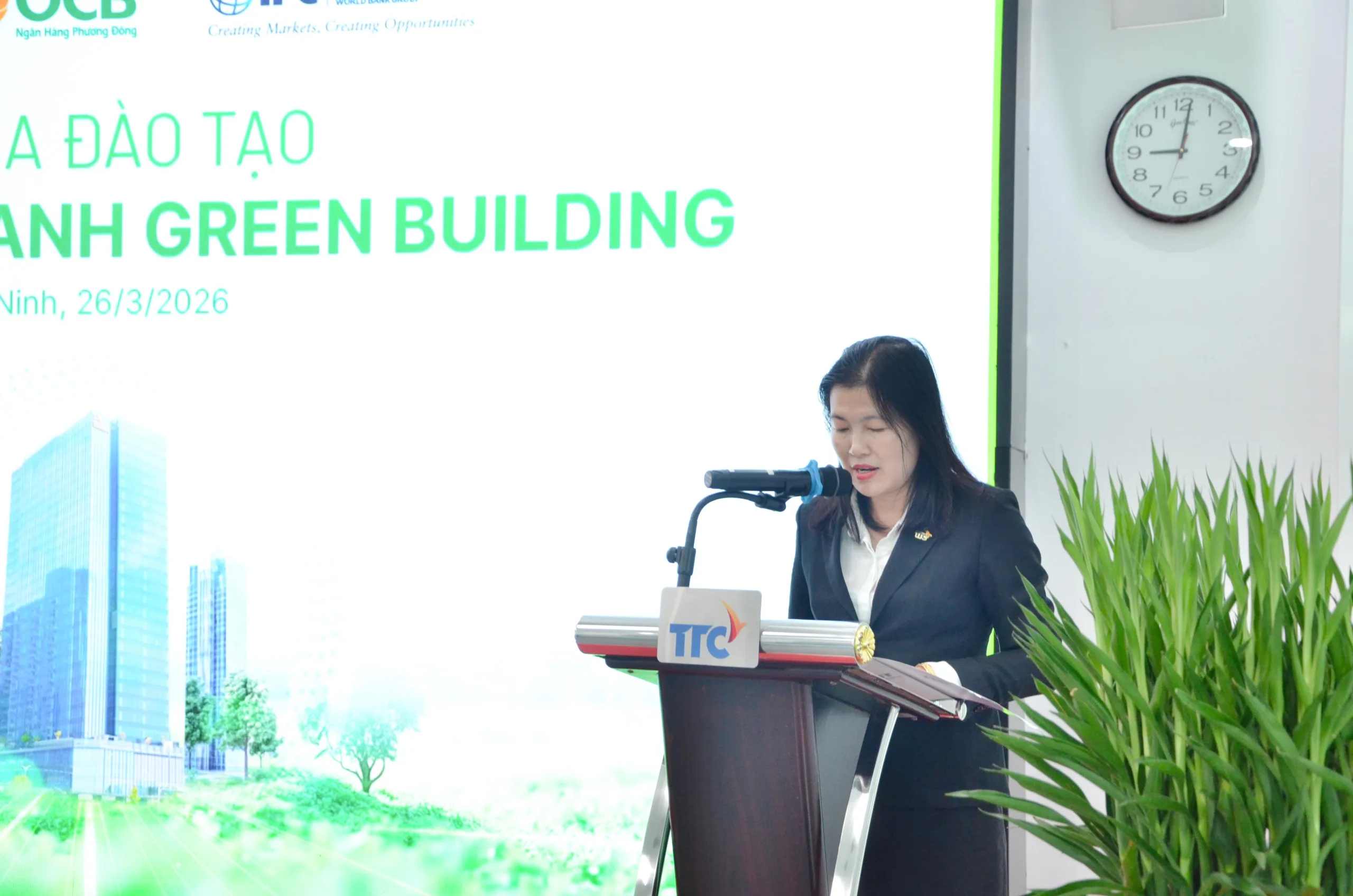
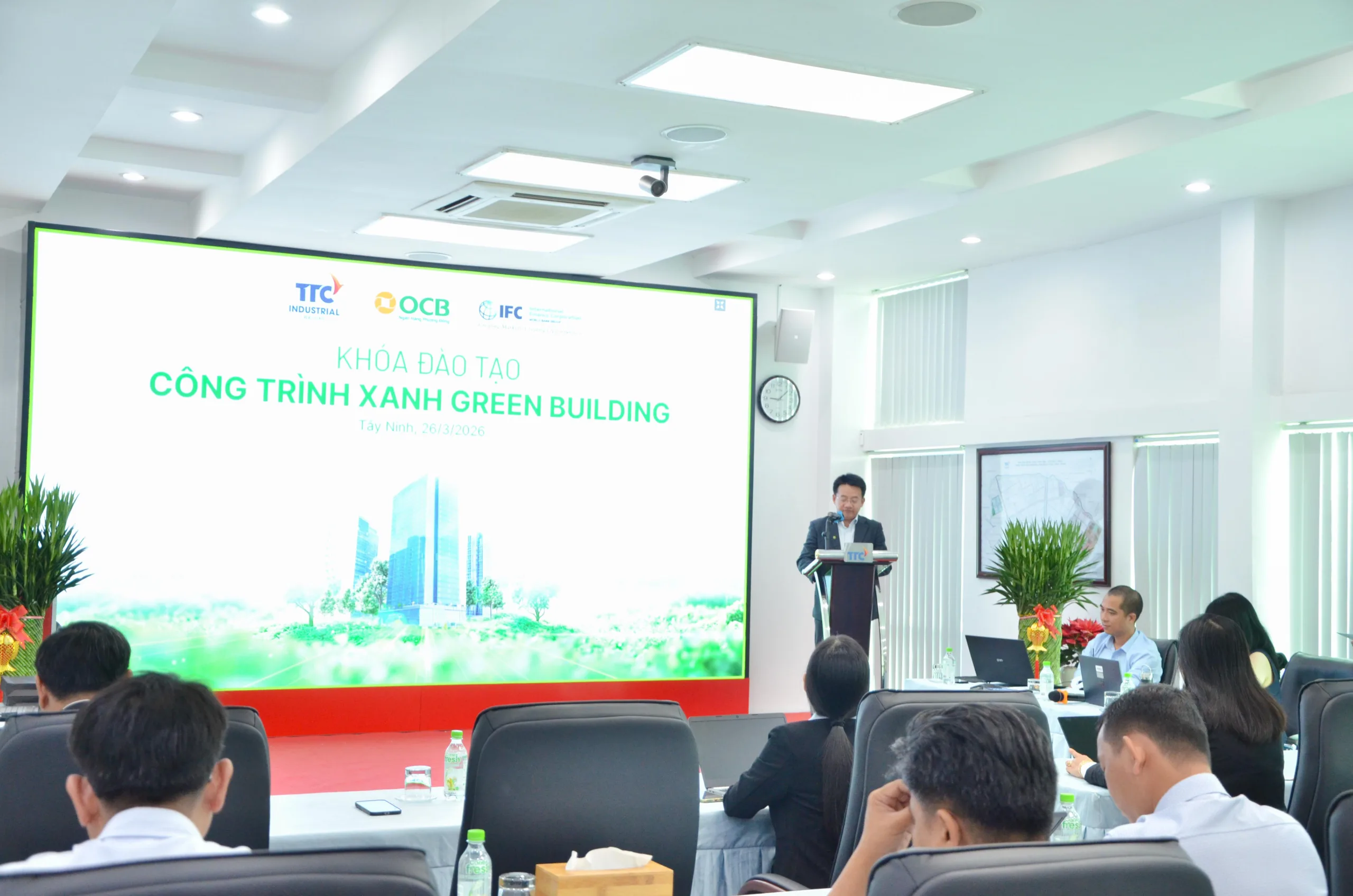
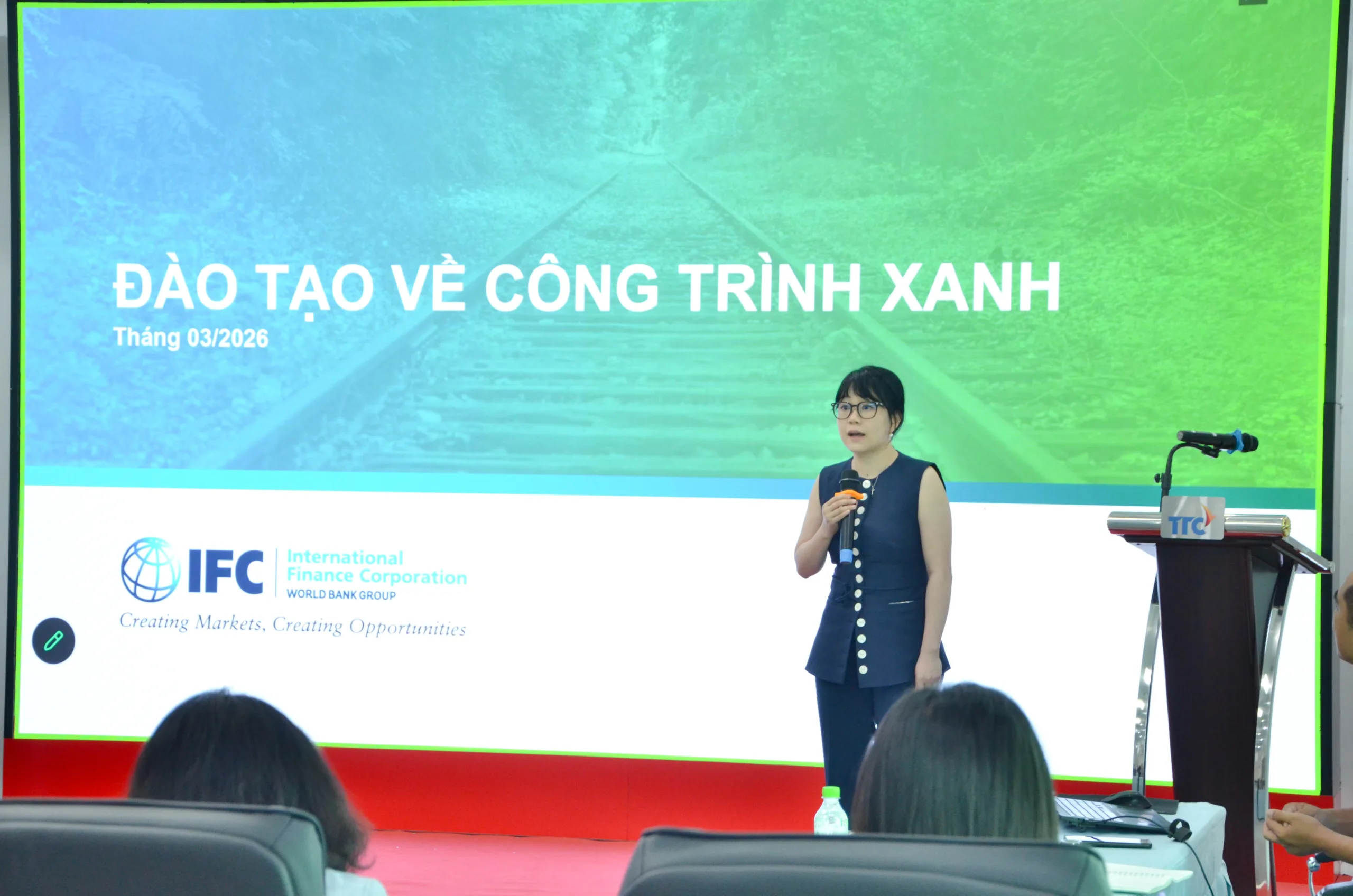
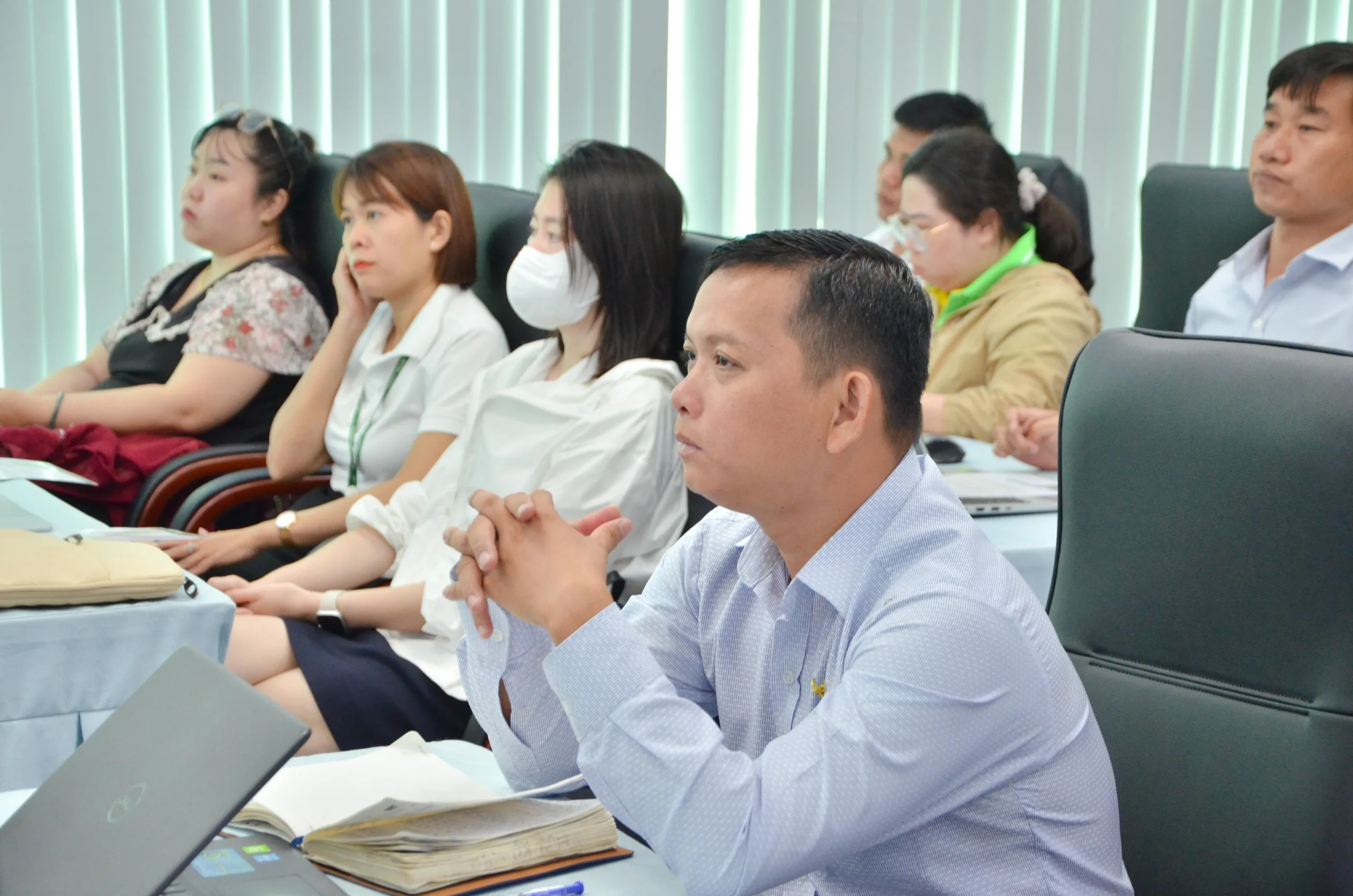
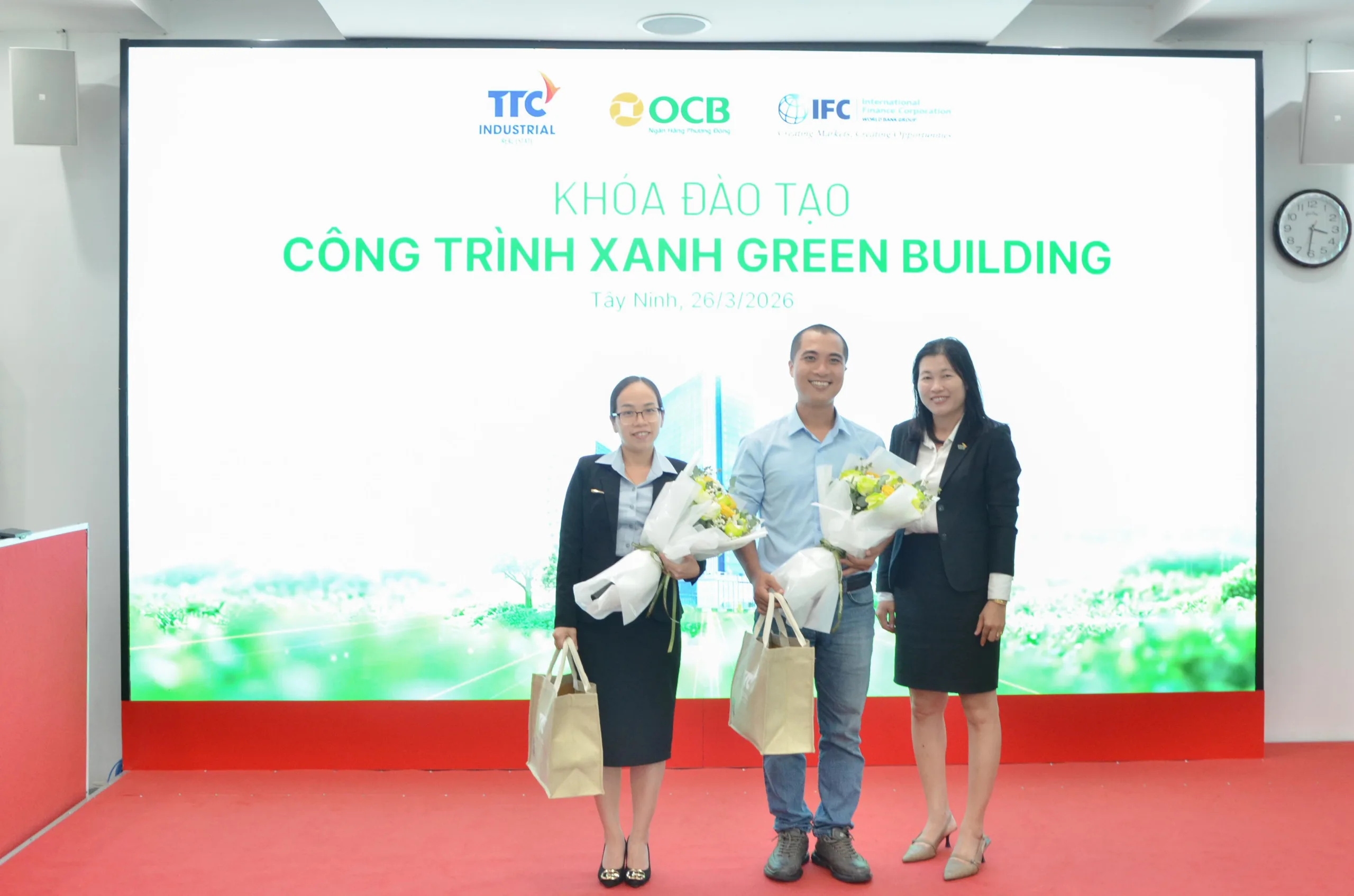
On March 26, 2026, Thanh Thanh Cong Industrial Park Joint Stock Company (TTC IZ), in collaboration with Orient Commercial Bank (OCB) and the International Finance Corporation (IFC), organized a specialized training program on 'Green Building' to connect international resources and green finance, enhancing the competitiveness of businesses in the industrial park. before The trend of shifting towards a green economy.
Elevating green building implementation capabilities to international standards.
Accordingly, the program focuses on updating sustainable construction trends and optimizing operating costs right from the design phase, supporting businesses in proactively building a roadmap for transitioning to the Eco-Industrial Park (EIP) model.
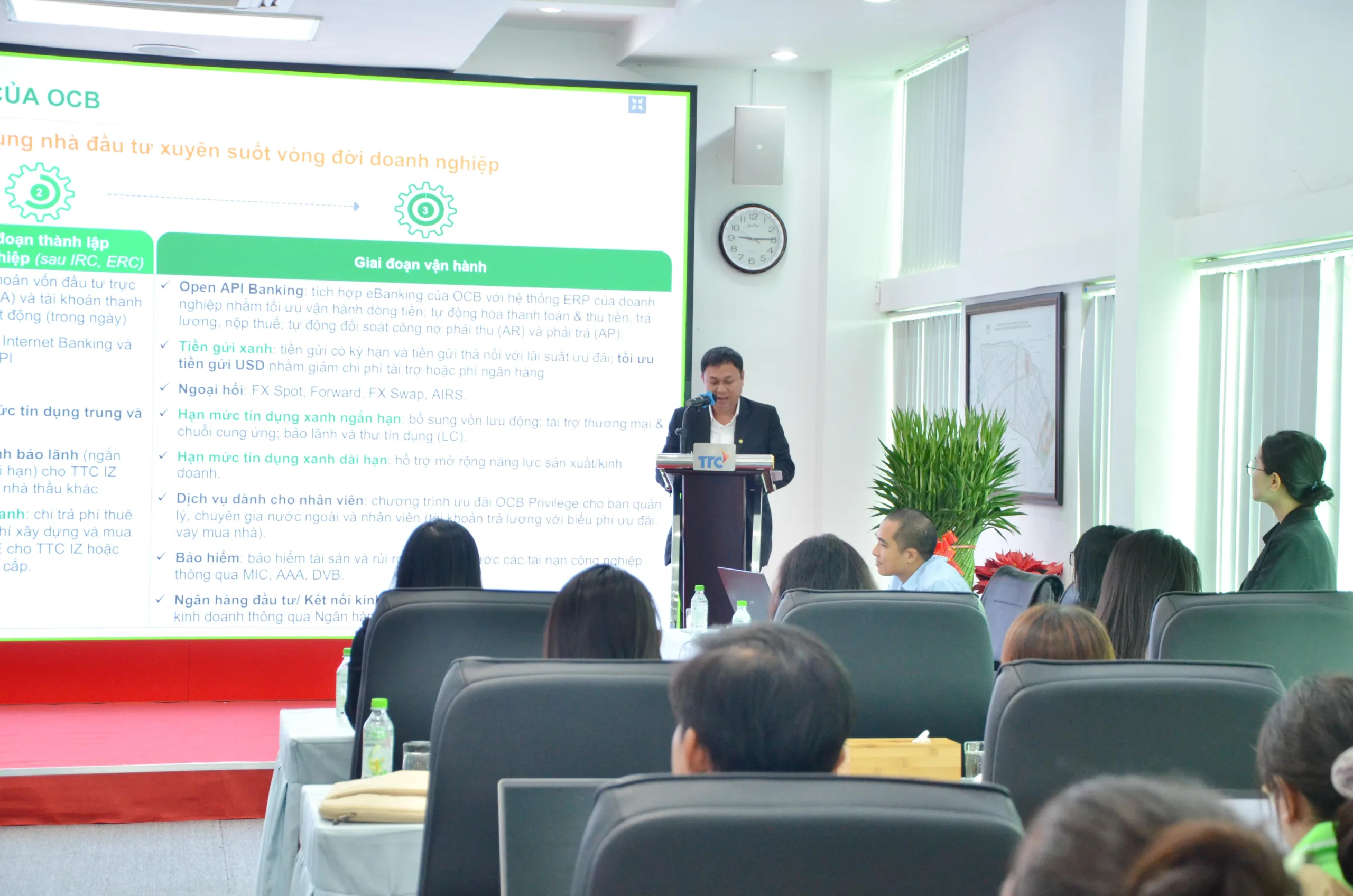
Under the guidance of experts from IFC, businesses receive training and hands-on practice using the EDGE App developed by IFC to accurately calculate energy, water, and material savings for their projects. This enables them to propose specific solutions to reduce carbon emissions and increase their access to preferential green credit programs from OCB – which is currently implementing a credit package for environmentally friendly projects with the support of IFC and the Australian Government.
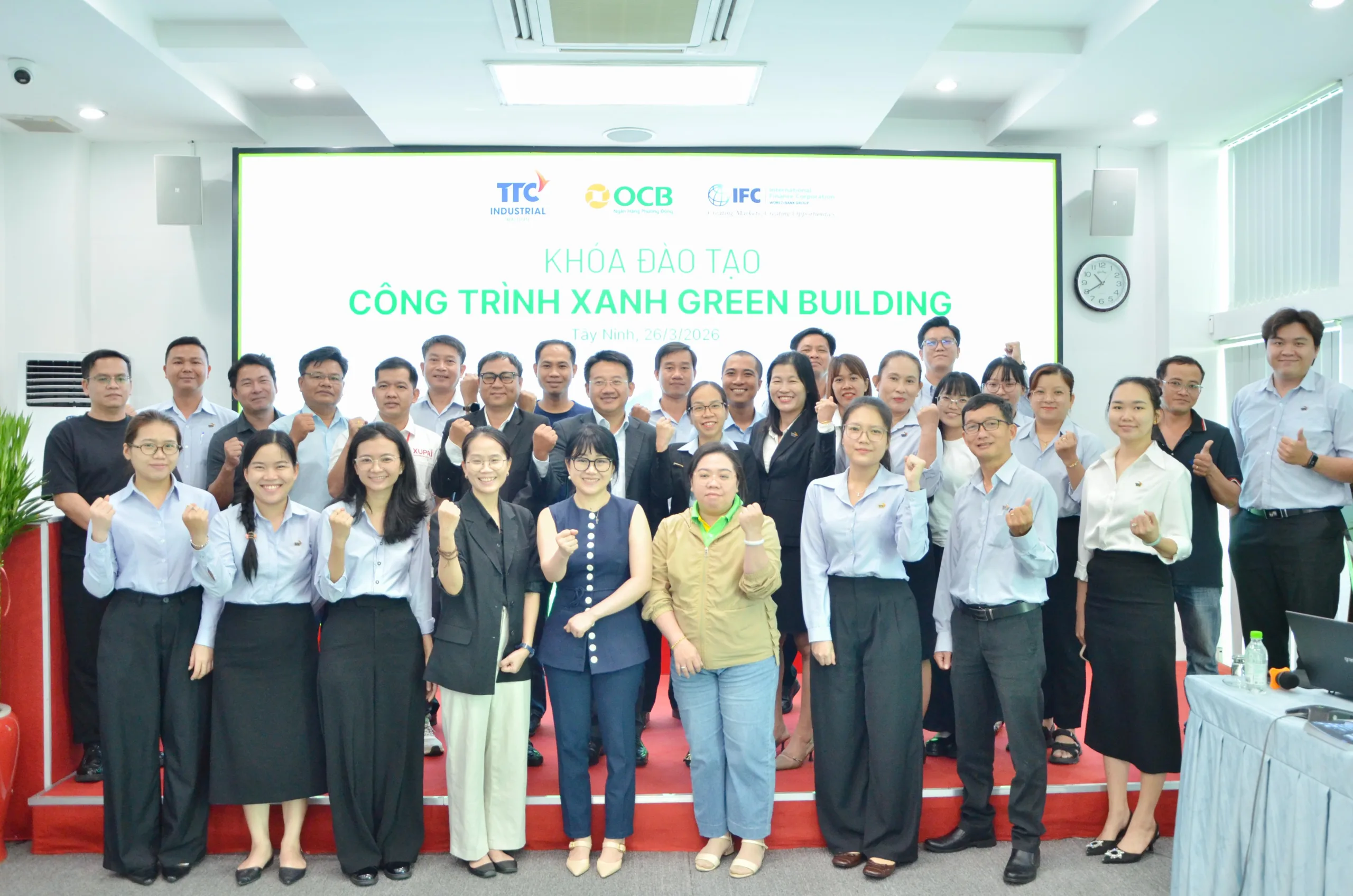
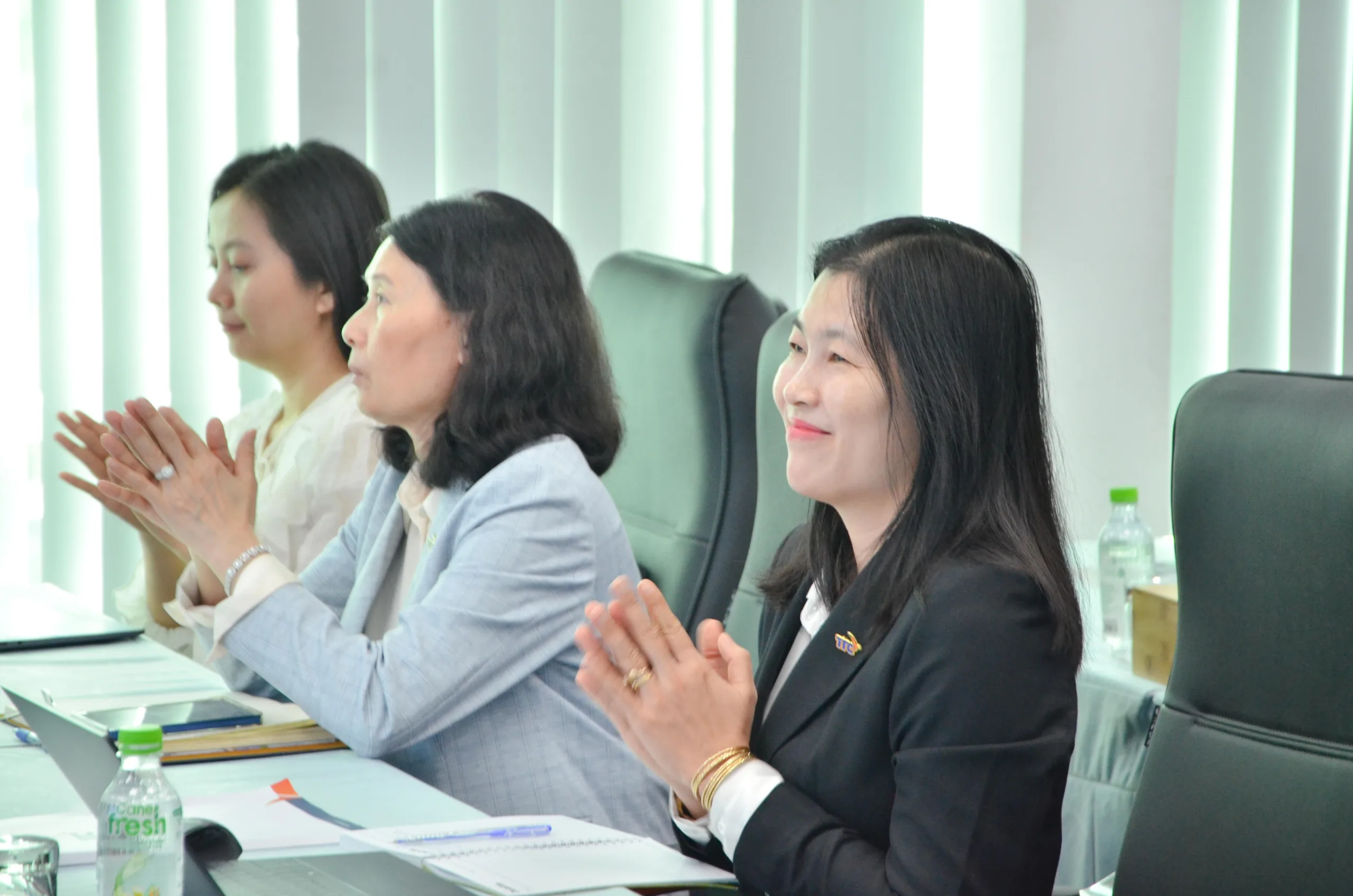
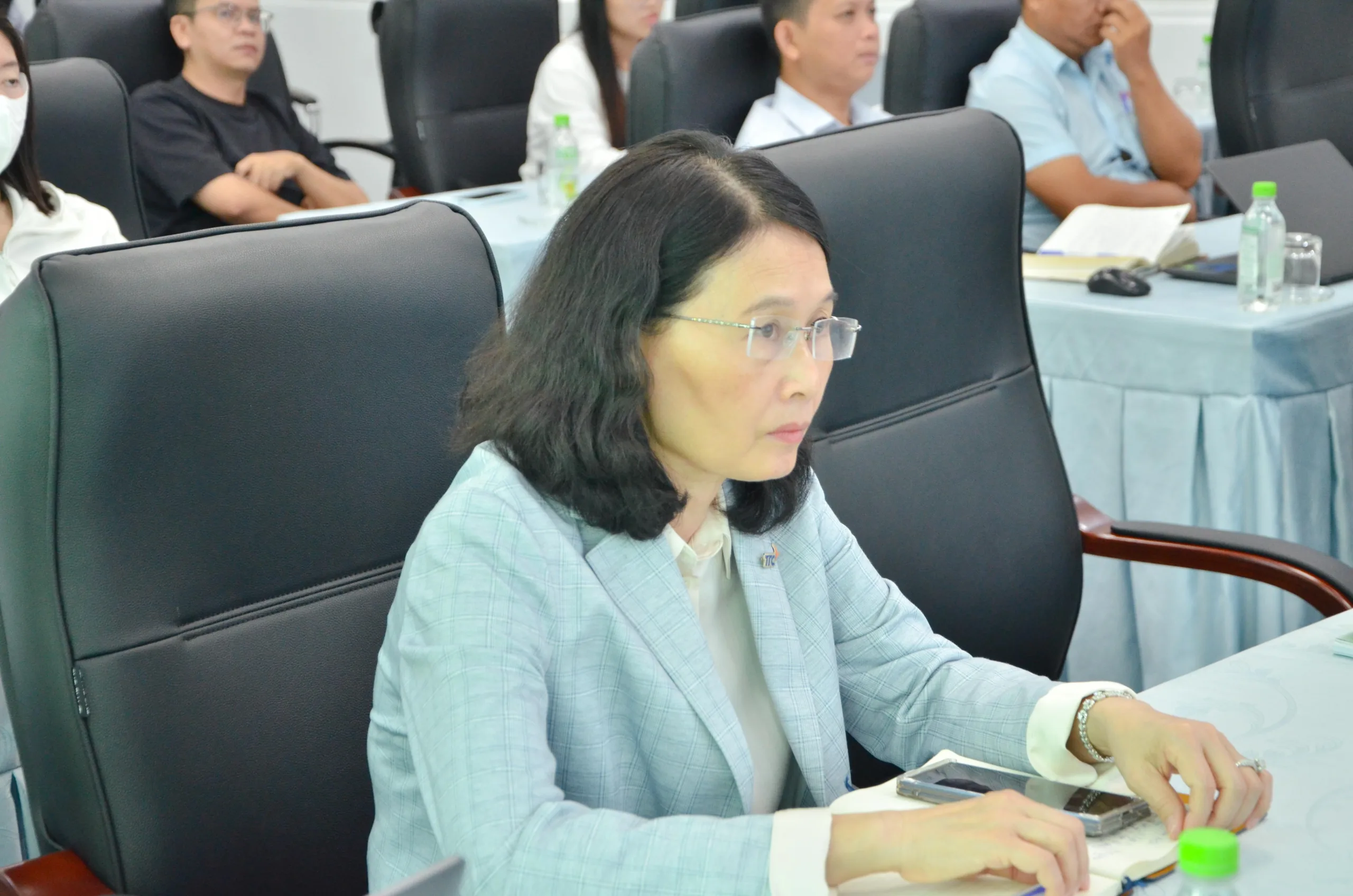
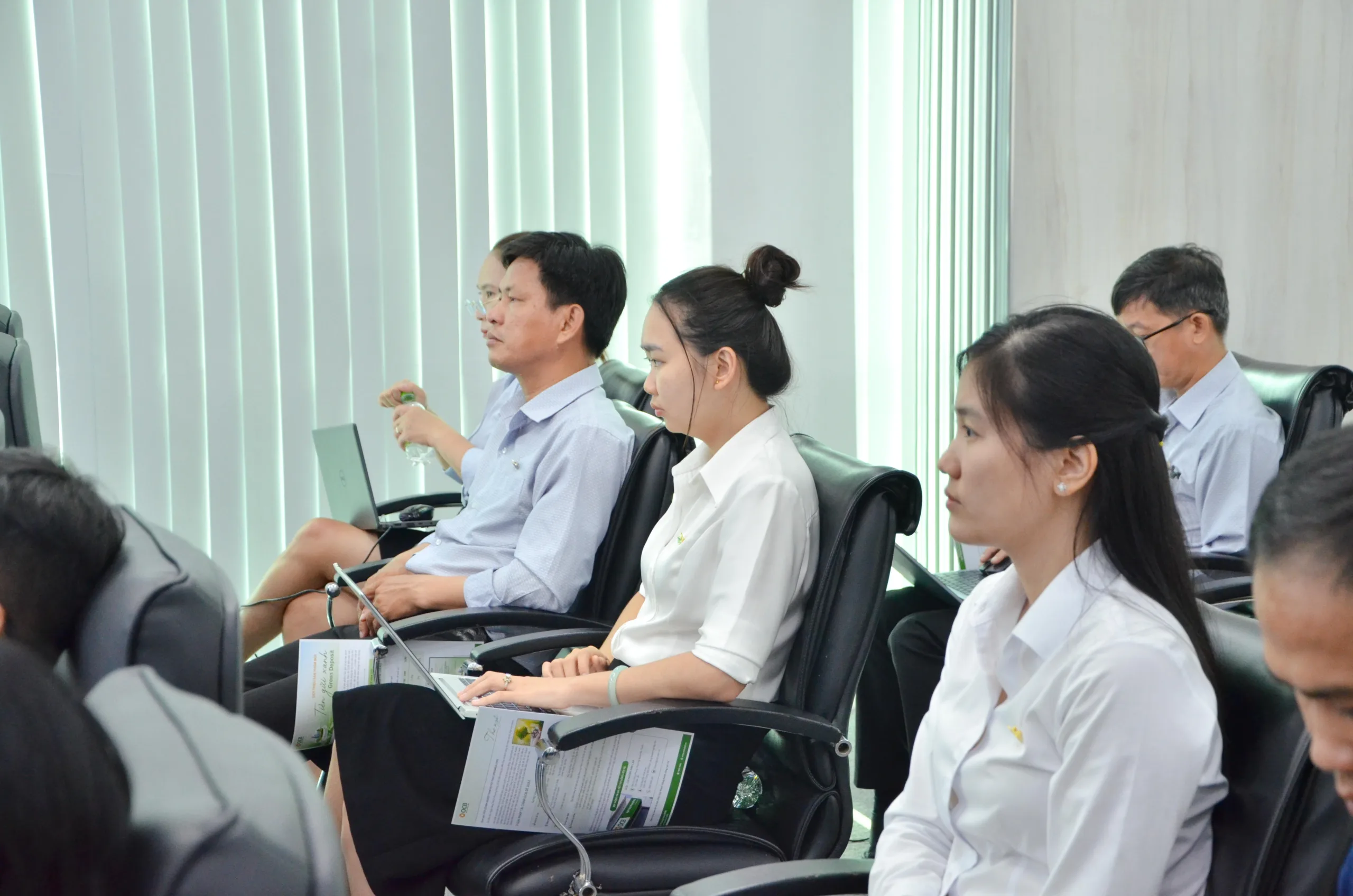
Businesses operating in Thanh Thanh Cong Industrial Park, Tay Ninh, participated in the 'Green Building' training program.
Improving infrastructure to meet ecological standards.
In its long-term strategy, TTC IZ identifies the transformation to a green industrial park model as a key solution to optimize operations and enhance adaptability to changes in environmental policies, gradually standardizing its development roadmap according to global standards, while increasing transparency to affirm its leading position in the green industrial real estate segment.
To fulfill this commitment, TTC IZ has invested heavily in clean energy infrastructure with a total rooftop solar power capacity of 13.8 MWp, directly reducing the average emission intensity in the industrial park to 0.69 tons of CO2.2e/billion VND in revenue. Simultaneously, the wastewater treatment capacity of the entire area has been increased to 31,000 m³/day (ensuring compliance with QCVN 40:2025/BTNMT standards) and the green coverage rate is maintained at 14.34% (equivalent to 109 hectares). This existing infrastructure ecosystem not only creates a foundation for symbiotic industrial activities but also supports businesses in overcoming carbon tax barriers (CBAMs) when exporting.
The wastewater treatment plant operating in Thanh Thanh Cong Industrial Park ensures that water is treated before being discharged into the environment.
Continuing its roadmap, TTC IZ plans to complete the construction of an additional wastewater treatment plant with a capacity of 15,000 m³/day and develop a green office building by 2027, with a total investment of approximately VND 180 billion. This Smart Eco-Industrial Park (EIP model) project is a milestone affirming TTC IZ's execution capabilities in upgrading asset value and providing smart infrastructure solutions for investors.
Unlocking green finance and optimizing investment value.
Besides improving infrastructure, TTC IZ plays a proactive role in coordinating and connecting businesses within the zone with sustainable financial solutions from OCB. The practical results are evident as nearly 20 businesses have expressed interest in accessing green credit packages through the support of TTC IZ, directly alleviating the initial investment pressure for sustainable production lines.
By 2027, TTC IZ is expected to create a green office building as part of its industrial park transformation plan.
For investors and shareholders, the sustainable industrial park strategy increases asset valuation and maintains a sustainable occupancy rate by attracting high-quality FDI clients. Standardizing data according to international standards also allows the company to access green financing sources with preferential interest rates, directly optimizing capital costs and increasing net profit. This is key for TTC IZ to protect long-term cash flow and increase competitiveness in the context of global supply chains restructuring towards sustainability.
On the morning of October 31, 2026, Thanh Thanh Cong Industrial Real Estate Corporation (TTC IZ) successfully organized the Fire Prevention and Control Sports Competition…
When researching the infrastructure of social housing projects in the Central Highlands, the transportation system and the network of amenities are two decisive factors.
On October 8, 2026, at the Tay Ninh Provincial People's Committee Hall, TTC IZ participated in a fundraising program for the 'For the Poor' Fund of Tay Ninh province...
On October 2nd, 2026, TTC Group, in collaboration with the Vietnam Brand Brotherhood (VBB), held the inauguration ceremony for the Entrepreneurial Boulevard and other events…
Following the success of the VIPF 2026 Forum, on the morning of September 30, 2026, Thanh Thanh Cong Industrial Park Joint Stock Company (TTC IZ) collaborated…