With social housing policies continuing to be refined and supply gradually expanding in 2026, the demand for social housing among workers and young families is increasing significantly. However, in reality, not all applications fully meet the eligibility criteria.
Proactively gathering information and preparing thoroughly from the outset is considered a crucial factor in helping buyers minimize errors and increase their chances of approval. Below are the core conditions to keep in mind.
Housing conditions are a prerequisite.
According to the 2023 Housing Law, buyers of social housing must belong to the group that does not own a house in the locality where the project is located; or already own a house but the average living space per person in the household is lower than the prescribed level (15 m² floor area/person).
This is a 'elimination' criterion. Providing truthful and complete information about the current state of the house is a mandatory requirement in the registration application.
Income is an important screening factor.
Next is the income requirement, a key factor in the review process. According to Decree 136/2026/ND-CP, effective from April 7, 2026, the income threshold has been adjusted to be more open, making it accessible to more workers, specifically:
Single people should not earn more than 25 million VND per month.
Single parents raising minor children cannot earn more than 35 million VND per month.
Married individuals whose combined income does not exceed 50 million VND per month.
Income levels eligible to register for social housing in 2026
Applicants need to provide proof of income through valid documents such as employment contracts, salary confirmations, or bank statements to ensure transparency in the review process.
Residence and employment identify the right target group.
Besides housing and income requirements, residency and workplace are also mandatory conditions to ensure that support policies reach the right recipients.
Applicants must have permanent or temporary residence in the locality where the project is located, with the temporary residence period being one year or more. Additionally, workers must have an employment contract of at least one year or an indefinite term, along with confirmation of participation in social insurance in the locality.
These conditions help ensure that housing funds are allocated in accordance with actual needs and create a stable long-term foundation for buyers.
Transfer regulations have been tightened.
Social housing is a type of housing with specific conditions, so its transfer is strictly controlled. According to current regulations, after 5 years of ownership (from the date of full payment), buyers can freely transfer ownership according to market mechanisms, without restrictions on who can buy it.
However, according to the new policy direction proposed by the management agency in 2026, transfers after this deadline may be restricted and resold only to eligible buyers of social housing to ensure the social welfare objectives are met.
Preferential loan policies support accessibility.
Ultimately, while not a direct elimination criterion, financial considerations remain a decisive factor in the practical feasibility of home ownership. Current social housing programs are supported by various preferential loan packages with low interest rates and long repayment periods, helping to reduce initial financial pressure for buyers. However, proactively assessing one's ability to pay, including the initial down payment and long-term financial planning, remains crucial to ensuring stability during the ownership process.
Loan incentives when registering to buy social housing at TTC residential area.
In current development trends, many industrial parks are expanding their role from production sites to integrated ecosystems, including living spaces for workers.
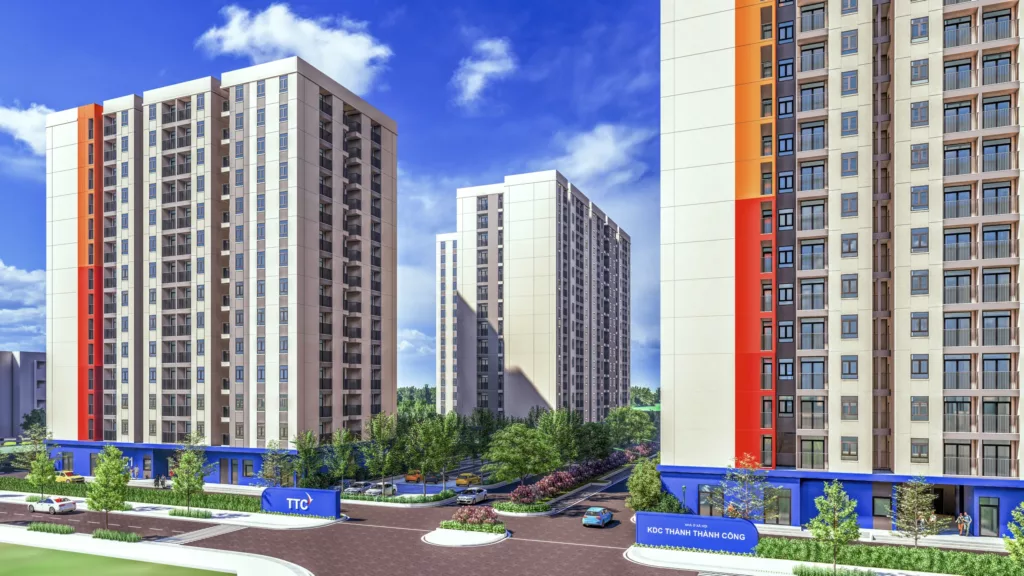
Perspective view of the social housing project in the TTC residential area.
At TTC IZ, this vision is gradually being realized, where the industrial-urban ecosystem is developed in parallel. The social housing project in the Thanh Thanh Cong residential area is being implemented to meet the housing needs of the workforce in the area, contributing to workforce stability and improving the quality of life.
Proactive preparation increases your chances of ownership.
Given the high demand and phased supply, preparing complete and up-to-date documentation early will help workers improve their chances of accessing social housing.
In reality, those who understand the regulations and prepare properly and sufficiently from the start often have a distinct advantage in the approval process, thereby shortening the journey to realizing their goal of sustainable housing.
On the morning of October 31, 2026, Thanh Thanh Cong Industrial Real Estate Corporation (TTC IZ) successfully organized the Fire Prevention and Control Sports Competition…
When researching the infrastructure of social housing projects in the Central Highlands, the transportation system and the network of amenities are two decisive factors.
On October 8, 2026, at the Tay Ninh Provincial People's Committee Hall, TTC IZ participated in a fundraising program for the 'For the Poor' Fund of Tay Ninh province...
On October 2nd, 2026, TTC Group, in collaboration with the Vietnam Brand Brotherhood (VBB), held the inauguration ceremony for the Entrepreneurial Boulevard and other events…
Following the success of the VIPF 2026 Forum, on the morning of September 30, 2026, Thanh Thanh Cong Industrial Park Joint Stock Company (TTC IZ) collaborated…